Hair salon waiting list: how to set one up properly
29 October 2026

A waiting list in a hair salon is an ordered record of clients who want an appointment, can't get one at the time they're after and are happy for you to let them know if a slot opens up. It stops a last-minute cancellation from turning into an empty chair. It works with three pieces: clear rules, a quick alert on WhatsApp and a short deadline to accept. Here's how to set it up step by step, with salon examples.
In short
- Note down on the list the service, the stylist and the time slots that suit each client. Without those three details, the alert is useless.
- When a slot opens up, offer it to whoever genuinely fits, in order of arrival, and give a short deadline to reply (for a last-minute cancellation, minutes, not hours).
- If the client declines or doesn't answer, move on to the next one without fuss and put the rule in writing for everyone.
- Ask only for the details you need and for clear consent to contact them, as Spanish data protection law requires.
- Measure how many cancelled slots you fill each month. If the number goes up, the list is working.
Contents
- What a waiting list is and when it's worth using
- How to build the list: what the client should tell you
- How to offer a free slot and what deadline to give
- Cancellations, no-shows and refusals: the rules that prevent trouble
- Personal data: what you can ask for and how to do it properly
- How to measure whether the waiting list works
- Doing it by hand or automating it
- What Vural does with your waiting list
- Our view: a waiting list is all about speed
- Frequently asked questions
- Sources
What a waiting list is and when it's worth using
A waiting list is the organised version of “let me know if anything comes up”. Almost every salon does it informally: a name on a Post-it, a message someone has to remember to send. The problem is that it relies on memory and on someone having their phone in hand just as the appointment is cancelled.
It's worth having one in these cases:
- Fully booked weeks. Friday afternoons, Saturdays and the weeks before weddings, parties or Christmas. There are more people without an appointment than free slots, and any cancellation fills quickly.
- Stylists in high demand. If people want a particular member of the team, the list lets them get in when that person becomes free.
- Long services. Colour with highlights or a straightening treatment takes half a day. If one falls through, the gap is big and losing those hours hurts.
- Frequent cancellations. If you already suffer from no-shows, the list is half the solution. The other half is preventing them with reminders, which we explain in our guide to WhatsApp appointments to reduce no-shows.
You don't need one if your diary always has plenty of free slots. In that case the effort should go into being found and booked, not into managing waits.
How to build the list: what the client should tell you
A useful list is a list with specific details. A bare “put me down” forces you to ask later, and by then the slot has gone.
Always ask for these four things:
- Service. Cut, colour, highlights, styling, beard. Each takes a different time and the free slot has to be long enough.
- Stylist. A particular person or “anyone”. The second option multiplies the chances of filling the slot.
- Days and time slots. For example, “weekday afternoons” or “any morning”. The wider it is, the easier to fit in.
- Contact method. WhatsApp is the most direct channel for an alert with a short deadline, because people check it straight away.
Example waiting list record
Client Service Stylist Suitable time slots Contact Marta Colour and cut (2 h 30) Lucía Tuesday and Thursday afternoons WhatsApp Iván Men's cut (30 min) Any Any day before 10am WhatsApp Carmen Highlights (3 h) Lucía Saturdays WhatsAppWith this table, if Lucía's Thursday 4pm appointment is cancelled, you know instantly that Marta is the first candidate and that Iván doesn't fit on timing.
A fair order
The simplest rule, and the easiest to explain, is order of arrival, as long as the client fits on service, stylist and time slot. If the first person on the list doesn't fit, they don't lose their place: you simply alert the next one who does. Tell people this from the start so nobody thinks they've been skipped.
How to offer a free slot and what deadline to give
The message has to be short, specific and allow only one possible action. Avoid open questions like “would any day suit you?”.
An example alert:
Hi Marta. A slot has opened up with Lucía tomorrow, Thursday, at 4pm for colour and cut. Would you like it? Reply “yes” within the next 15 minutes and we'll book it for you. If not, we'll offer it to the next person on the list.
Reply deadlines
There's no official deadline. It's your decision, and it depends on how soon the slot is:
When the slot is Suggested time to reply Within the next few hours 10 to 15 minutes Tomorrow 1 to 2 hours In a few days By the end of the dayThese are deadlines we suggest as a starting point. Adjust them to your pace of work and to how your clients respond.
What to do when the slot is very soon
If someone cancels at very short notice, alert two or three people at once, as long as they fit, and make it clear the slot goes to whoever replies first. That's the usual approach for last-minute cancellations, because waiting for people to answer one after another eats up your margin.
Cancellations, no-shows and refusals: the rules that prevent trouble
A waiting list without rules fills up with misunderstandings. Write four rules and put them where clients will see them: on your WhatsApp profile, in the appointment confirmation and in the message they get when they join the list.
- If they turn the slot down. They stay on the list for another chance. A “that doesn't suit me” isn't a strike against them.
- If they don't reply in time. You move on to the next person. If they reply late and the slot has already been taken, you explain kindly and they keep their place.
- If they accept and then don't turn up. Here it is worth having a policy. A reminder before the appointment reduces the risk, and for long services you could consider a deposit. You'll find it in our guide to advance payment for appointments.
- If the client from the list cancels. Another slot opens up and the cycle starts again.
Reminders matter as much as the list. The fewer appointments fall through, the fewer slots there are to fill. You'll find the details in our guide to WhatsApp appointment reminders.
A tone that doesn't sound pushy
The client on the list is under no obligation to accept. Avoid phrases like “this is your last chance”. A friendly message works better, with a clear deadline and the door left open: “if today doesn't suit you, we'll let you know next time”.
Personal data: what you can ask for and how to do it properly
A waiting list stores names and phone numbers, so it falls squarely under data protection law. It isn't complicated if you only ask for what you need.
- Ask only for what's necessary. Name, phone number, service and time slots. You don't need anything else to tell someone about a slot.
- Clear consent. Spain's Organic Law 3/2018 on data protection rules out tacit consent: it must come from a statement or a clear affirmative action. In practice, the client has to say “yes, let me know on WhatsApp” or tick a box; saying nothing isn't enough.
- Don't make the service conditional. Under the same law, you can't make performing the contract depend on the client consenting to data processing unrelated to that contractual relationship. If you want to use their number for promotions, ask separately and let them say no without losing their appointment.
- Use it for what you said. If they signed up to hear about a free slot, don't add them to a promotions list without their permission.
If you also send alerts by SMS with a sender name instead of a number, bear in mind that, according to the CNMC press release (Spain's competition and markets regulator), since 15 September 2026 businesses that use sender names must register them to keep sending messages identified with them. If you only work with WhatsApp, this doesn't affect you.
For your other questions about messages and data, see our guide to WhatsApp and GDPR for businesses. If your case is unusual, talk to a data protection adviser.
How to measure whether the waiting list works
You don't need a complicated dashboard. Four numbers a month tell you whether it's worth it.
- Cancelled slots. How many appointments fell through in the month.
- Slots filled from the list. How many of those slots were taken thanks to an alert.
- Fill rate. Filled divided by cancelled. If it rises month on month, you're on track.
- Response time. How long passes between the cancellation and the alert. The shorter it is, the more slots you recover.
An example with made-up numbers to practise
Imagine a salon with 20 cancellations in a month. If it fills 6, its fill rate is 30%. If the next month it alerts people sooner and fills 10, that rises to 50%. These are example figures to show the calculation, not data from any study.
Also note how many clients on the list never reply. If there are many, check the record: perhaps the time slots they ask for are too narrow.
Doing it by hand or automating it
At first you can keep the list in a spreadsheet and send the WhatsApp alerts yourself. It works as long as there are few cancellations and someone can react straight away.
It gets complicated when:
- The cancellation comes in at night or on your day off.
- You have to work out who fits among several people.
- Two clients say yes at the same time.
- You spend more time writing messages than looking after clients in the salon.
That's when a tool that does it on its own pays off. We explain how the messaging side works in WhatsApp bookings: how to receive and automate them, and what to reply outside opening hours in the WhatsApp away message.
What Vural does with your waiting list
Vural is an AI virtual assistant that manages your diary and bookings on WhatsApp. It books, changes and cancels appointments on its own and, on the Pro plan, runs the waiting list: it offers each cancelled slot to whoever is waiting, with a time limit to reply. It also answers outside opening hours, uses your business's tone and vocabulary, sticks to the prices and terms you set and connects with Google Calendar. There's no commission per appointment and no minimum term.
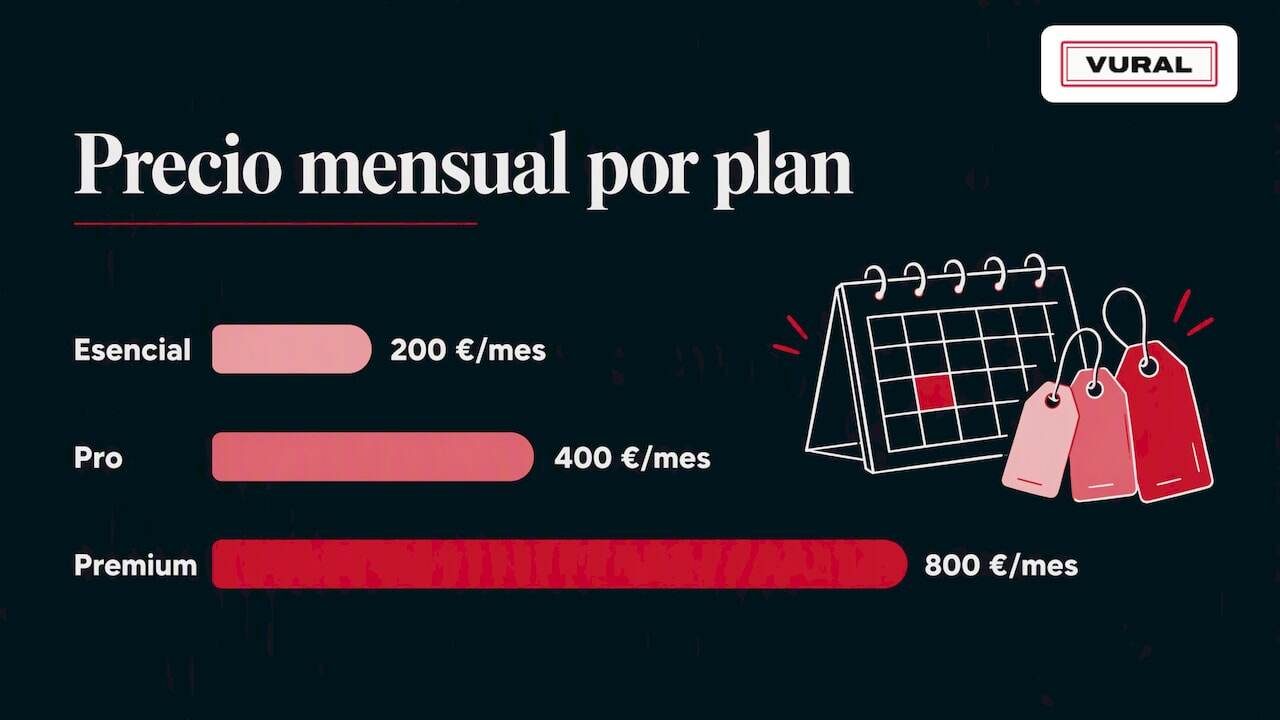
The plans are monthly: Solo, €49 a month; Pro, €69 a month, excluding VAT. Setup is a one-off fixed-price payment depending on the plan: €299 on Solo and €499 on Pro. If you need more AI conversations, there are packs of 100 conversations for €19. We set it all up with your business's details and the monthly fee starts once it's working.
If you'd like to see how it would work in your salon, take a look at Vural's plans. For more ideas, there are more articles for appointment-based businesses on the blog.
Our view: a waiting list is all about speed
In businesses that live off their diary, the same thing happens again and again: the slot isn't lost because nobody wants it, but because nobody gets there in time to offer it. When a client cancels at 9pm, the salon is closed, the team is resting and the waiting list is just a piece of paper.
That's why we stand by three simple ideas. First, the list must have specific details: service, stylist and time slots. Second, the alert must go out the moment the cancellation happens, including outside opening hours. Third, the rules must be clear to the client and fair to the order of arrival.
Our assistant is built for exactly that: answering on WhatsApp in your salon's tone, offering the slot to whoever fits (on the Pro plan) and keeping the diary in order, without you having to keep an eye on your phone. You decide prices and terms, and the assistant sticks to them.
Frequently asked questions
Is a hair salon required to have a waiting list?
No, it isn't an obligation. It's a management tool and it's your choice. If you have cancellations or very busy weeks, it helps you avoid losing income. If you keep one, handle your clients' data in line with data protection law.
How long should you give a client to accept a slot?
There's no set deadline. As a guide, 10 to 15 minutes if the slot is today, and a couple of hours if it's tomorrow. What matters is that you explain it in the message and apply it equally to everyone.
Can I charge people to join the waiting list?
Joining is usually free, because the client doesn't have an appointment yet. You can ask for a deposit when they accept a slot for a long service, and it's best to say so in advance. See our guide to advance payment for appointments.
What do I do if two clients accept the same slot?
Give it to whoever replied first, as long as they fit. Explain kindly to the other that the slot has been taken and that they're still on the list. An automated tool avoids this situation because it closes the slot as soon as someone accepts it.
Can I contact people on the list via WhatsApp?
Yes, if the client has given you clear consent to contact them on that channel. Ask for it when they join and don't use it for anything else without separate, explicit permission.
Sources
- Organic Law 3/2018 of 5 December on the protection of personal data and the guarantee of digital rights (BOE, in Spanish)
- CNMC press release on registering SMS sender names (in Spanish)
Recommended reading
More articles

1 November 2026
How to ask your customers for reviews on WhatsApp in 2026
Learn how to ask for Google reviews on WhatsApp: when to send the request, how to get the link, templates for each type of business and what Spanish law says.

31 October 2026
How to avoid overbooking in your appointment diary
Why appointments get double-booked in hair salons, beauty salons and physio practices and how to stop it: one calendar, confirmations and a waiting list.