How to centralise appointments from all your channels
25 October 2026

Centralising appointments from your channels means that everything reaching you by WhatsApp, Instagram, phone, web or in person ends up in a single diary, with a single view of availability. That way there are no double bookings and no unanswered messages. For an appointment-based business, such as a hair salon, a physiotherapy centre or a beauty salon, it takes four moves: choose a main channel, connect a single diary, automate the routine replies and make it clear when a person steps in.
In this guide we explain how to do it step by step, what the tool you choose should have and what to watch out for with your customers' data.
In short
- A single diary as the source of truth prevents double bookings and paper notes nobody can find.
- One main channel, usually WhatsApp, makes life simpler for your customers and your team.
- AI can take care of bookings, changes and basic questions, out of hours too, but it needs a protocol for passing sensitive cases to a person.
- If you use an outside provider, you are still responsible for the data: check the contract and the security.
Contents
- Why appointments get out of hand when they come in through many channels
- Which channels to bring together
- How to centralise your appointments, step by step
- What the tool you choose should have
- Centralise the front desk, not the whole conversation
- Customer data: you are still the one responsible
- Our view
- What centralising with Vural costs
- Frequently asked questions
- Sources
Why appointments get out of hand when they come in through many channels
This is typical in a small business: one customer messages on Instagram, another rings while your hands are full, a third sends a WhatsApp at eleven at night and someone else books on the website. Each channel has its own inbox and, sometimes, its own diary.
The result is the same almost everywhere:
- Two people booked at the same time.
- Messages left unanswered until the next day.
- Cancellations that arrive through one channel and are not noted in another.
- Free slots that nobody offers again.
Speed of reply matters more than it seems: many people expect an answer within a few minutes, whether by phone or by chat. If your customer writes at 22:00 and gets a reply at 10:00, they have probably already booked somewhere else.
Which channels to bring together
You don't need to be everywhere. Before connecting anything, note where your appointments come from today and how many each channel brings in over two weeks. You will usually find these:
- WhatsApp: the most convenient channel for the customer. If you want to go further, we have a guide on WhatsApp bookings and how to automate them.
- Instagram and social media: direct messages asking about prices and free slots.
- Phone: still the first point of contact for many people, especially at clinics.
- Form or website: bookings that arrive by email or in a separate dashboard.
- In person: the appointment that gets booked at the front desk at the end of a service.
It isn't about getting rid of channels. It is about making sure that, wherever they come in, all appointments end up in the same calendar.
How to centralise your appointments, step by step
1. Choose a main channel
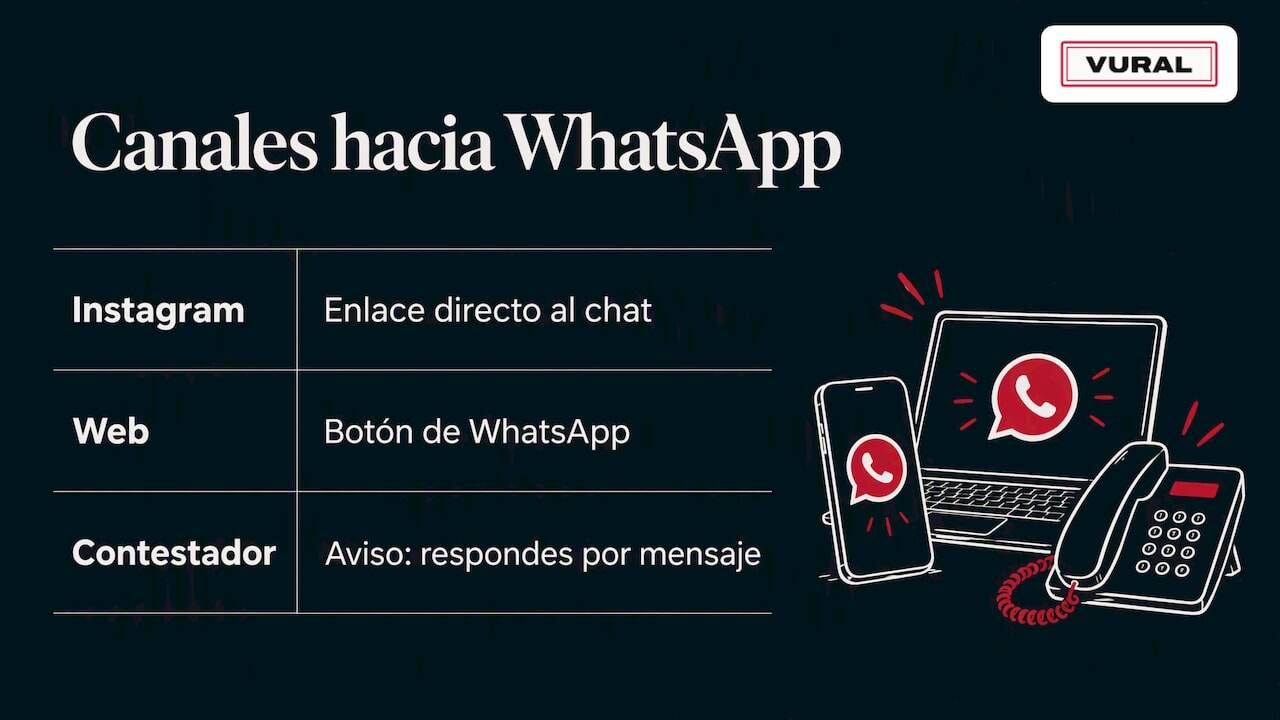
Decide where you want the conversation to happen. For most service businesses in Spain it is WhatsApp, because your customers already use it every day. The other channels can stay open, but each one points to the main one: on your Instagram profile, a direct link to the chat; on the website, a WhatsApp button; on the answering machine, a message saying you reply by text.
2. Make a single diary the source of truth
Every appointment is written in one calendar, and that calendar has the final say. If you already work with Google Calendar, you can keep it as the base. The important thing is that nobody notes appointments anywhere else “to remember”. That scrap of paper or notebook is where most overlaps come from.
3. Set your rules once
Length of each service, who performs it, opening hours, time between appointments, cancellation policy, prices and whether you ask for a deposit. Once the rules are written down, any system (or any new member of the team) answers the same way.
4. Automate the repetitive
Most messages tend to be the same questions: do you have a slot on Thursday?, how much is it?, can I change the time? A well-configured AI books, changes and cancels appointments without you having to touch your phone. For reminders, see our guide to WhatsApp appointment reminders and the templates for confirming an appointment.
5. Get ready for out-of-hours enquiries
Some bookings arrive at night, over the lunch break or on a Sunday. If those messages wait, they are lost. There is more detail in our article on the WhatsApp away message.
6. Review every week
Look at how many appointments came in per channel, how many were cancelled and how many slots were left empty. With that data you adjust hours, services and messages. If the tool produces reports, this review takes you ten minutes.
What the tool you choose should have
There are three kinds of solution: an online diary with a booking form, a set of separate tools that you stitch together yourself, or a virtual assistant that talks to your customers on WhatsApp and writes straight into the diary. To compare them, use these criteria:
Criterion What to check Single diary That it reads and writes to one calendar, with no duplicates Real-time replies That it answers at any hour, not only during office hours Your own tone That it sounds like your business, not like a generic robot Cancellations That it frees the slot and offers it to the waiting list Payments and deposits That it handles deposits to reduce no-shows Customer history That it remembers past services and preferences Costs That it is clear whether it charges a commission per booking Data That it complies with GDPR and lets you sign a data processing agreementPay particular attention to the point on costs. A model with a commission on every booking grows with you, but it also eats into your margin the better you do.
Centralise the front desk, not the whole conversation
Automating everything is a mistake. Although people value bots being available 24/7, trust is still higher with people. The sensible approach is a hybrid model: AI takes care of the routine (bookings and time changes) and a person handles what is complex or sensitive.
A GfK study on AI in customer service (a German study commissioned by Greven Medien) supports that idea for local businesses. In practice, the failure is rarely the technology; it is not having an escalation protocol.
Examples of messages that should reach a person:
- A customer writes that she has had a reaction after a hair colour and wants to book another appointment.
- A physiotherapy patient says it hurts more after the last session.
- A complaint about a service or a charge.
- Any message that mentions urgency or feeling unwell.
Agree with your team on a list of words and situations that trigger an alert, who gets alerted and how quickly they reply. If you work in physiotherapy, this ties in with what we cover in automating physiotherapy appointments with AI and WhatsApp.
Tell people they are talking to an AI
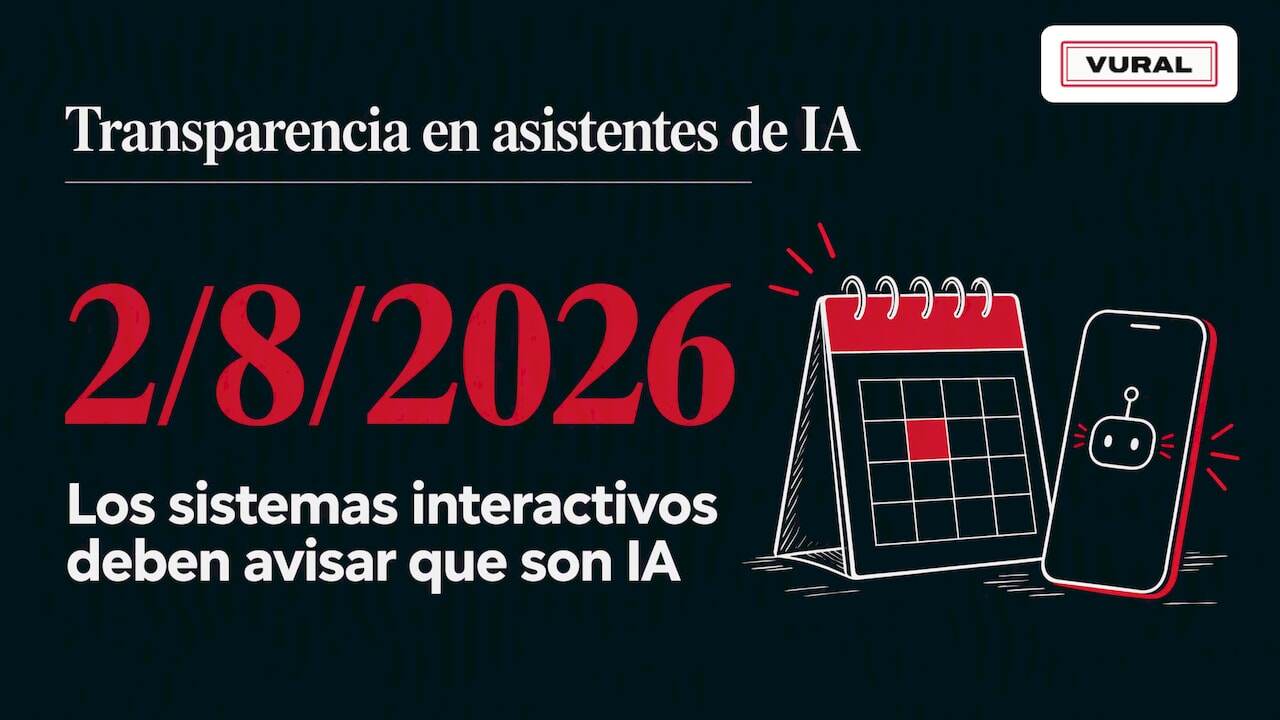
The European Commission states that, from 2 August 2026, AI systems that interact with people, such as chatbots and virtual assistants, must disclose that they are not a human being. The Commission also explains in a statement on the application of the AI Act that interactive systems will have to tell users that they are dealing with AI. The simplest way is to say so in the first message: “I'm your centre's virtual assistant. I can book you an appointment; if you'd rather speak to a person, just tell me”.
Customer data: you are still the one responsible
When you centralise, you also concentrate personal information: names, phone numbers, service history and, in physiotherapy or clinics, sometimes health data. Three practical points:
1. You are the controller. The German data protection authorities, in their position on appointment management companies, stress that outsourcing does not mean losing control. The centre must choose providers that guarantee security and data minimisation. It is a German document, but the approach matches the logic of the GDPR, which also applies in Spain.
2. Contract and use of the data. Even if your customer agrees to receive reminders, that does not replace the contract with the platform. Ask for it to be stated in writing that appointment data is not used for the provider's own purposes.
3. Access security. The AEPD (Spain's data protection authority) notes in its March 2025 data breach report that most incidents in the private sector are due to weak or compromised credentials. Use different passwords, two-factor authentication and role-based permissions: the front desk doesn't need to see the same as management.
If you use WhatsApp for all of this, read our guide on WhatsApp and GDPR for businesses. And if you have specific questions about health data, consult a data protection officer or a specialist lawyer.
Our view
In hair salons, beauty salons and other appointment-based centres the same pattern repeats: the problem is rarely a lack of customers. It is that they get lost along the way. A message at eleven at night with no reply, a cancellation that never gets filled.
That is why we built an AI-powered diary that replies on WhatsApp in real time, out of hours too, and writes straight into the diary. It learns each business's tone and vocabulary, sticks to your terms and prices, and charges no commission per appointment and has no lock-in. On the Pro plan, when an appointment is cancelled, it offers the slot to whoever is on the waiting list.
We are also clear about one limit: AI is for the routine. Anything sensitive should reach a person. Centralising well means putting everything in one place and deciding sensibly what gets automated.
What centralising with Vural costs
If you want all this to work without setting it up yourself, Vural works on WhatsApp only: it replies, books, changes and cancels appointments in your diary and keeps a record for each customer. The waiting list and the business report come with the Pro plan, and deposits with Stripe at booking with both. The two published plans, excluding VAT, are:
- Solo: €49 a month, for one professional.
- Pro: €69 a month, up to 10 professionals.
On top of that there is a set-up, a one-off fixed price depending on the plan: €299 on Solo and €499 on Pro. You can extend your AI conversations with packs of 100 conversations for €19. We set it up with your details, the monthly fee starts once it is working and there is no lock-in and no commission per appointment. The details are at vural.io, and if you are looking for more ideas, there are more articles for appointment-based businesses on the blog.
Frequently asked questions
What does centralising appointments from several channels mean?
It means that bookings from WhatsApp, Instagram, phone, web and the front desk are stored in a single diary. Each channel can carry on existing, but they all write to and read from the same calendar. That way you see your real availability at any moment.
Do I need to give up the phone or Instagram?
No. You can keep all your channels and steer people towards a main one, usually WhatsApp. What changes is that appointments stop being noted down in different places.
Can AI handle appointments without losing the personal touch?
Yes, if you use it for the routine and define when a person steps in. A hybrid model is the advisable approach. Set up a friendly tone and an alert for complaints, emergencies or questions about the service.
What do I do with my customers' data when using an outside platform?
You are still the one responsible. Sign a data processing agreement, check that the provider does not use the data for its own purposes and protect access with two-factor authentication. If you handle health data, consult a data protection specialist.
Sources
- Transparency obligations under Article 50 of the AI Act (European Commission)
- The Commission starts enforcing the AI Act rules (European Commission)
- KI im Kundenservice: Eine Chance für lokale Unternehmen
- Data breach notifications, March 2025 (AEPD)
- Position of the data protection authorities on appointment management (DSK)
Recommended reading
More articles

1 November 2026
How to ask your customers for reviews on WhatsApp in 2026
Learn how to ask for Google reviews on WhatsApp: when to send the request, how to get the link, templates for each type of business and what Spanish law says.

31 October 2026
How to avoid overbooking in your appointment diary
Why appointments get double-booked in hair salons, beauty salons and physio practices and how to stop it: one calendar, confirmations and a waiting list.